Why 75% of First-Time Attendees Never Return (And What to Do About It)
Listen to episode
Episode Summary
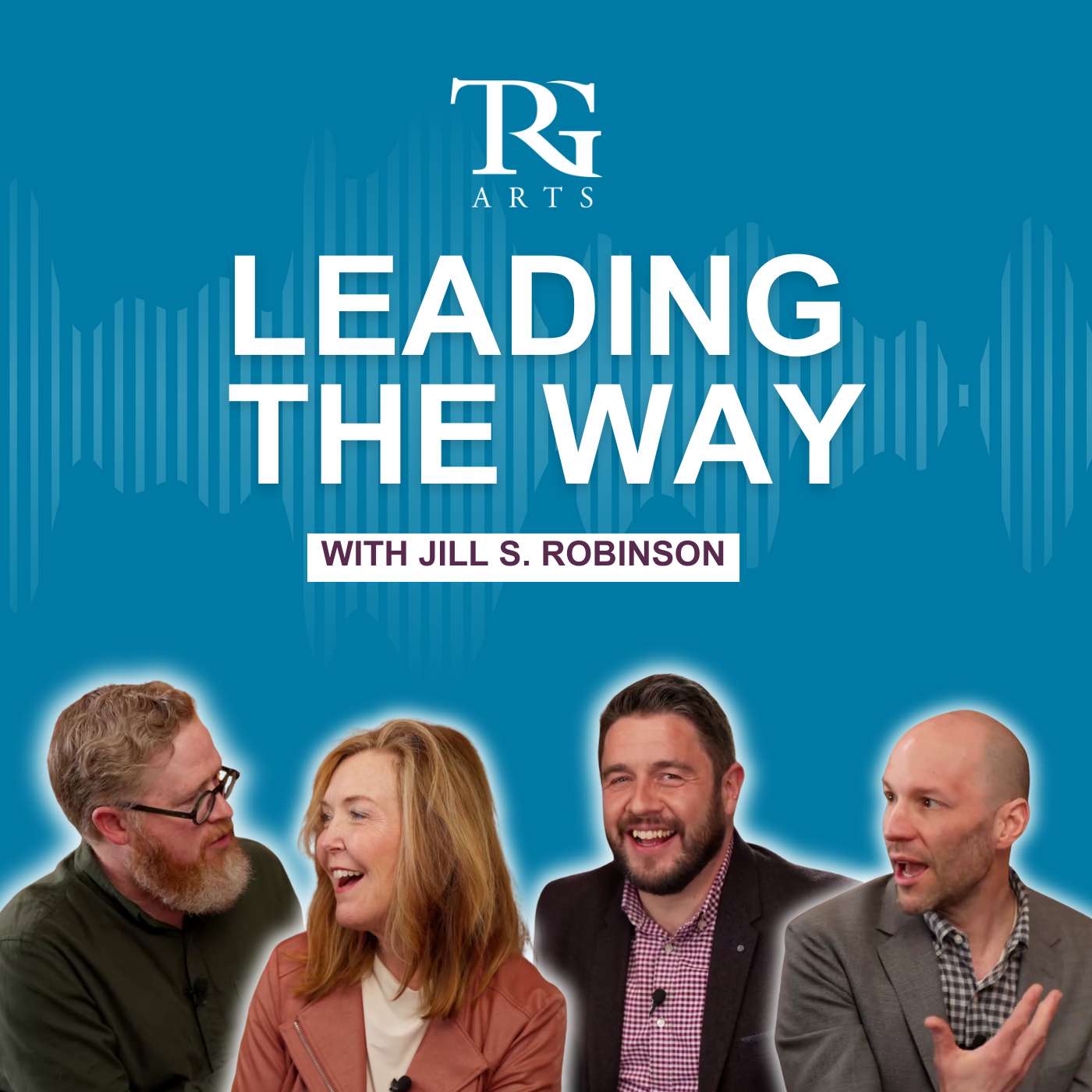
In this episode of Leading the Way, host Stephen Scripeg discusses the challenges arts organizations face in retaining first-time audiences, with guests Jill Robinson, Eric Nelson, and Brad Carlin. They explore the importance of pre- and post-visit communications, emphasizing the need for tailored engagement strategies to encourage return visits. The conversation also delves into the role of programming, pricing strategies, and the significance of understanding audience relationships to improve retention rates.
Key Topics
Full Transcript
Each year, half of audiences at many arts organizations are brand new, and of those, over 75% never return. Are we as a field over-prospecting but under-retaining? And what needs to change? I'm Stephen Scripeg, and joining me today are Jill Robinson, Eric Nelson, and Brad Carlin. Welcome to Leading the Way.
Okay, so let's talk about those first-timers and how challenging it is to get them to come back again after their first visit. Eric, are there moments after that first visit that are high-impact touch points that have a really big impact on the likelihood of a first-timer returning?
Stephen, I think that's a really interesting word that you use, which is after, but actually there's before and during that make a really big impact. Like, why wait until after? Like, you come into a venue and there's a point where somebody welcomes you in or not, and how weird does it feel if someone doesn't welcome you into the venue? You don't feel connected.
Totally. Think about a know-before-you-go email, right? I think every organization sends some kind of pre-attendance communication to audiences, but rarely are they segmented. Rarely are they speaking to knowing full well that they have different relationships. They have new, they have existing, they have returning audiences attending that performance. But rather than tailoring information that might be relevant and helpful to their particular relationship with the venue, they're just sending a kind of blanket information, which for some who attend regularly is going to feel like, this is the same stuff I see all the time. And for others, it's going to feel like, but I don't know about this, or I have specific questions. I may not know where to park. I may not know which entrance to use, or will you have food and drink available? Plant the idea that you are starting a journey with us that we're really intentional and thoughtful about.
So it's clear that we need to think really carefully about what happens before. And yet there is a moment when someone's having their first visit, and the invitation to come back is really, really key. If there was one step folks could take after a first time visit, what would that step be that you think would have the greatest impact at changing the opportunity for someone to come back?
To ask soon and quickly to get in front of the follow-up. You know, later on, are we getting a thank you and a welcome back invitation? The timing of that invitation is really important. And this is something we've seen in the field. This is something we've tested, right? It's not a difficult thing to send a follow-up email to ask an audience member to come back. That's a relatively common practice, but there's important nuance there about the timing of that. Oftentimes that is sent, the timing of that communication is sent based on the rhythms of our staff, not based on the rhythms of our audiences.
And so when we're talking about that invitation, making sure that it is waiting for them as soon as they pop out their phone, as soon as the performance is over, and there is a message waiting for them right there that is inviting them back, thanking them and inviting them back maybe with an offer or whatever the next step that they've determined for that audience member is.
Not waiting until Monday afternoon when the marketing team is sitting down at their desks and being like, okay, I have people I now need to follow up with who attended over the weekend. That's communicating based on our team's rhythms, rather than the rhythms of our audience members and their experiences in our buildings. When we talk about the dating analogy, it puts our efforts in the context of the receiver, which is somebody who we are trying to woo. And so you asked the question about the next step after, but it's all of the prep for the date that matters as much. So being able to tell someone that I'm wearing a tan jacket and I've got readers. And I've actually pre-selected a couple of things.
There's a glass of something on the table for you when you arrive. There was a marketing director at a really large theater company who used this and came screaming up to me at a conference saying, Jill, Jill, Jill, my husband on our first date asked me out during the first date for the second, so around timing. And so they put seat back cards in front that said, Jill, we're so glad you're here. And here's the invitation that we'd like to make to you for the next show. And that came out of a task force that they had on their team, where they were constantly coming up with tactics and ways to try to get at this better mousetrap.
What holds us back from doing these things? Brad, you just described it like it's sort of a staffing thing, right? And we were back in the office on Monday, so we'll do it on Monday. But why wouldn't we think differently about it? Why is that taken over as the norm versus doing it on the front end and having it ready to go?
Well, I think it's about having that intention that understands this segment's really important. This relationship I have with new audiences is really important. This relationship I have with someone who I'm really interested in is really important. So you prioritize things a little differently. You think about it differently. You anticipate. You prepare differently. You're not reactive to be like, okay, I guess I'll call back that person I went out to coffee with last week and see what they're up to. Like if that person is a priority to you, you make the effort and the energy to be to talk to them at the right time, to talk to them as soon as they arrive.
One of my favorite stories is at a client who has implemented this practice. And I was attending for the first time just as a citizen, as a normal person, not as a consultant who's working with the theater. Not Brad Carlin coming to the show? Just Brad Carlin, theater lover. And Brad Carlin, theater lover, brought his daughter with him to see a show at a client's theater. And so in their system, I was showing up as a first-time ticket buyer. And we arrived for the performance, and we had this seatback note. It blew my daughter's mind. She looked at it. She's like, dad, they know who you are. Right? And it was really fascinating. The family in front of us got one, too. They looked at it, and everybody in the group was like, this is so cool. It's a very simple gesture that can start to create those really lasting impressions that allow us to at least reduce the friction of a potential return visit.
The great thing is for our sector is that it's not happening all the time. So it's an opportunity. It's a huge opportunity, because how often do you get acknowledged in that way?
You asked a really interesting question, which is why doesn't this happen? And you said, the data tells a story about the volume of people that are at risk in our databases today, right? And a big chunk of them are first-timers. On a volume basis, the field is seeking new, new, new, new, new. And retention rates are really low. So we've got this big volume of people and all of this work. Like if we were to change our website so that a chatbot came up and said, hi, Jill, you're new. We're so glad you're coming and said something interesting. Same thing happened on the phone. The pre-event email said, Jill, do you know where to park? And then and then all the steps. You do that. And if you get like, what, Brad, 1% of them to come back, it feels like you've done all this work. That's all we've gotten.
And yet, I'm going to brag on the Houston Ballet. Andrew Edmondson, marketing director, for 10 years after every single performance, he was doing this thing, mechanized it. And they saw 10 years of growth in frequency of patron return year on year. And who sees that kind of 10-year package growth and size of package growth? It's remarkable. Took a lot of discipline. Discipline is the thing.
I actually think about Belgrade Theatre in Coventry, who have had the discipline of the follow-up immediately after that. The postcard, the email, the tactics that still direct mail still. Yes, absolutely. Because how often do you get something through the mail that's for you? That's not a bill or a demand. And their first time of retention has increased by 10% to like 65%. And that is well below the average.
To go back to the dating analogy, it's not just a moment in time. Relationships grow because we put time and effort into building them. So in both of these examples, neither one of these were just one thing that got them there. Andrew didn't just send out one email immediately after. It was event on event, year on year. And people see that and then they start to feel more comfortable and want to come again. And that connection starts to bloom.
And you do have to feel success. It's an interesting point because actually there are moments when you do, you look back and go, well, three first-timers came back again. And it doesn't feel successful. But that's the ROI. That's the challenge we run into around how to ROI this, right? And which is ultimately why there is hesitancy in implementation. It's because full days, full plates within organisations. And they're saying, how can I ROI the time on this particular piece of work that you're asking me to do?
And this is where maybe another analogy of how do we think about the fitness coach or the dietician who's helping you eat better? And it's not that I had a salad today at lunch. And so therefore I will, the ROI on my salad tomorrow in my health, tomorrow done, worth it. It was worth the salad yesterday. No, the discipline around those practices changes the ROI horizon into something completely different. That's not about this week. That's not even about this season. That is about the decade of good discipline and good practice over time that generates some of those results.
So we all at this table are working with clients, all of us. And we see the fatigue. Like, what are you saying to clients right now who say, I don't have the time and I don't have the money. What do you say?
The question to be able to raise, this is where transparency and collaboration with your colleagues to say, hey, I need to move something off my plate at this moment in time. And we are not good as a sector of saying that because we want to do everything we feel in the arts. We should do everything. That's really hard to say to your leader, who you feel often most of the time you're disappointing 80% of the time.
So I think some of this also is about leaders giving permission and ensuring that they're clear about where their focus would be. That's a big step. I think there's time to be found within our teams and within our structures that doesn't have to come from an external source. That doesn't have to come from the implementation of technology.
There are apps, there are tools, there are capabilities within CRMs. So to tell a client, explore your options around automation that exists. Now there's loads of automation. Yes, requires some learning. It's going to require some time to learn these new things. But we often have untapped capacity within really important roles within our organization, namely the box office. Our frontline staff, the job description or the job requirements don't exist. They aren't the same from 1995 or 2000 in terms of the volume of inbound, right? Inbound communications, people walking up into the box office or people picking up the phone and needing to call. That has become a much smaller role. And oftentimes those roles are reactive roles.
And if they're not on the phone in that moment, there's untapped potential capacity there where if we restructure job titles, if we restructure positions to say, I have a person who has time, who has skills that maybe I need to develop, but I can steer those skills and that energy to another part of the business that's going to free up or add to the capabilities that I don't currently have.
If you're an organization watching this and you are not focusing anything on first timer retention right now, what are the two things that you must start doing from tomorrow that will impact this 75% figure? Well, a dating analogy, we've got to know who they are so that we can invite them back. And we cannot only do that on email. Like we cannot only use email because it's cheap and cheerful. It's got to be digital. It's got to be direct mail and it's got to be curated, right? I mean, Brad, by name, I'd like to invite you back to something else quickly. That feels to me as important as anything.
I'm looking at Brad because we just were talking about the data. I mean, to get somebody to come back within 18 months. You're breaking the mold, right? You are an outlier if you're coming back that often. Now, that doesn't mean we don't think about the timing of our invitations, right? I may still ask you for that date, but life may mean that I can't see you for that amount of time. But that doesn't mean I'm waiting until that to get that commitment from you about when I'm going to see you next. We'll keep asking. We'll keep asking. And that's, I think, the important thing in terms of the tactical stuff is thinking about your rapid response and then to think about your follow-up. The rapid response, how close can you get that to the moment that that curtain comes down for that invitation for the second date to take place? And to already have it planned when the follow-up is going to take place, ideally through another channel, right? So that it isn't all email. So that I know I'm going to rapid response and email right away. And when 99% don't respond, I already know what the next step is going to be when it's happening and through a different channel.
We have data that tells us we've got a pretty tight window to get them back if we're going to get them back. To get them to say yes, not necessarily when that event is going to be. We've got about six months after their first attendance in order to have any real shot to get them back. After that, the response rates get really flat. So we have a window that we need to be thinking actively in that time. How am I making those invitations? What channels and how frequently?
I want to add something that I think gets to this point about before the visit, which is for you to gather your patron services team, your front of house team, and sit together and imagine the experience of a customer for the first time. Every touch point, every interaction, every experience, and how that can be optimized for that welcome and that first experience. We all know what it's like to visit a venue, a theater, or go to a restaurant, wherever it would be. And we know those rubs and friction points. So let's sit together and identify them and work through one by one about how we can make that experience a little bit better, a little bit more magic that will hopefully help make that experience perfect.
I love that. And it goes back to a conversation you and I had years ago with Fred Reichelt about the Net Promoter Scoring System. And remember these episodes? That's what you're talking about. These episodes that may have friction points and how you ID them. I do think it's important to acknowledge what those biggest friction points are and then not to dwell on those that you can't fix. Most people can't fix the toilets in the car parking and in a reasonable amount of time or with the resources that they have. So don't dwell on those.
And don't chuck the whole effort out the window because you're like, well, we can't fix our toilets or we have no control over our parking. But you can set expectations, right? I remember standing in a queue in a venue and there was just someone being entertaining while everyone queued up. Just make the experience not like you're being herded through a cattle pen. So there's ways. So there's the experience and then there's what's on stage and the impact that programming has on retention and both first-timer attention and also this point around recency. There's a new methodology that we're talking about. We're using words called magnets and honey for programming. Can you give us a bit of an introduction about what those words mean and maybe how a magnet or a honey piece of programming can have an impact on retention?
Yeah. So I think we've really, over time, we can't ignore how vital the role that what we're putting on our stages, how vital a role the programming plays in shaping the relationships that we have with audiences. It is a critical part to understanding the relationships with our audiences, how to drive recency, how to drive frequency, how to increase customer value over time. And so we have been working on ways to better understand how we can impact that link between what's on our stage and the relationships that we have. And sometimes it requires us thinking about roles of programming just as we would roles within our organizations, within our teams and on stage, right?
Exactly. Job descriptions, right? Or a role as a character in a play, right? This is the role that I play. Sometimes you get to be, as Eric often was, the leading man, or other times it's an ingenue, and other times it's a clown, right? You're playing a role and you know what your role is and how it contributes to the larger narrative. And we have this in our staff as well, right? Not every person who works within an organization has the exact same job description. We have tailored job descriptions to achieve particular outcomes, how we measure effectiveness, how we measure performance within our teams. We wanted to bring that thinking to programming as well, not by saying good art, bad art, do less of this art, more of that art, but rather how do we get really clear about the job descriptions? Can programming be magnetic or is programming more like honey?
And think of a magnet that just, if it's programming that is magnetic, it is pulling people in. It is drawing new people in. It's drawing people in from the database, but it is pulling people in. And there is different programming that acts more like honey, which is what is keeping them around, which is what is making them sticky, quite literally, to the organization. And that balance and understanding the programming that we need both, if we had all magnets, we couldn't sustain. If we had all sticky honey programming, we couldn't pay our bills. So what is the right balance? What is the right sequencing of this programming? So that programmatic decision makers, marketing folks, and even fundraising and development professionals can be speaking the same language about the role and impact that our programming is going to have. If we have too many magnets, I imagine there's a revenue correlation between magnets and honey, right? It sounds to me as though magnets will be taking the lion's share of revenue. And why would I not have a program full of magnets if that is paying the bills and covering my expenses?
There is a financial element to the way we think about magnets and honey that runs in a different axis. So think about magnets and honey as your x-axis, right? And we're just looking at the draw in the audience. How much of this is about drawing new people in versus how much of this is about programmatic stickiness within that programming? So think about your four quadrants. You've got magnetic programming that may have low financial impact, right?
Think about programming, for example, that's targeted towards very particular communities or is outreach or participation-focused. It is not actually about driving revenues, but it is about engaging new people. It is a magnet. It can still be magnetic, right? It can still be magnetic, but it's not actually about the money. And you can have up here in the top right something that's actually very sticky. That is your bread and butter. That is a show. I know for many of my UK clients, for example, this is like where Panto sits. Panto has high, high, high levels of loyalty and stickiness and doesn't have quite the new-to-file attraction that we see in other programming. But it is vital financially. So it sits over here in this quadrant, which is super sticky, but also has a high financial score.
So just because something is magnetic doesn't actually mean it's the big blockbuster that's going to bring in loads of money. We have to kind of balance these things out and understand where is it about the value of the total attendance versus the value of the audiences and the households and relationships that are attending. And we often say, well, you can blockbuster yourself to death. And so we would be perhaps making a lot of one-and-done income, but not with the recurring revenue that is sustaining. I always think of that as sugar rushes. Like we'd get these like jolts of something, but then we crash afterwards. So it's a little bit of how do you get some sustained calories?
We have data on this. So what is the long-term impact? How do you blockbuster yourself to death? Why does that happen? I think this is a fundamental question for the field, actually. Do you care? Do you think you need, as you pencil it out, recurring income or not? And if you're only doing annual budgeting, then it may disguise your need for recurring revenue because if we have recurring revenue, the cost of maintenance and the cost of delivering on what the business produces decreases. And that is the promise in recurring revenue. When every dollar, pound, euro matters right now, my only metric of success right now is that figure.
So how can we think about it differently beyond, "oh, that show didn't hit its revenue goal, so it's a failure." This gets to the job description element of this Magnets and Honey framework. There is, if we treat every show with having the same job description and therefore having the same metrics for performance evaluation for success, then we're going to find ourselves in this situation where more honey-driven programming is being held to the same standard of sort of success or failure as more magnetic programming, which we know just demoralizes teams and makes us feel like we're failing on these shows, rather than understanding that the value of those shows, we have to look at their success differently.
And it has to be about what relationships is it fueling and sustaining. When we study this kind of behavior, when we study these audiences that are attending Magnetic shows versus Honey shows and things in between, what we find in the Honey shows are much higher proportions of donors, much higher proportions of members in the UK and in Canada, and much higher proportions of subscribers in the United States in particular. Those relationships, way more valuable. They are contributing far more to the bottom line of that organization on a per household basis than what they are doing to fill the number of seats or to pay that highest per cap on that particular show.
So when we reposition to understand that the job description of honey programming is to actually fuel, to provide some sugar, we need some calories, to provide some sustenance to those relationships that are more valuable beyond, did we get to 70% capacity sold or not? And if we didn't, it's a failure is a really important distinction. It requires some balance to get at this intersectionality of patrons that we need to sustain the future of the field.
We need the programming that is good for second dates, that's lower risk, lower cost. We need to create the opportunities throughout the year. If everything was only four things a year and they all needed to be a big blockbuster, there just isn't enough entry points or invitations for folks to get a little closer, learn a little more about what you do, get some interest in maybe what might be your more mission-oriented programming that the artistic team is really passionate about and is important, but oftentimes doesn't have the same kind of draw as more magnetic.
How do we get the artistic teams on board here? Because this might, to them, sound a bit like programming by data. We have got to get artistic directors at the table in this conversation. At the beginning, today, artistic and executive leaders have to be partners in this. And I actually see more awareness of that on the artistic side than I did 20 years ago or 30 years ago, for sure.
There's not a recipe here. There's not an algorithm about programming. This still, I'm sorry, and I'll plant my flag to say, AI is not going to program our seasons. It is still going to take artistic professionals and artistic leaders to both create and curate the programming that is going to sustain our organizations and the relationships that we have.
There is no magic kind of math here that we can bring. Isn't that wonderful? It's wonderful. And it is wonderful because that is the soul of the organizations that we work with. And yet, there can be strategy. There can be collaboration. There can be shared vocabulary across teams. And so that is where this framework and these job descriptions and this approach that we're talking about can be really impactful.
Another strategy that impacts this, which is pricing. So, and I wonder about Honey and Magnets, the things that I've seen there is how we price those products differently too. And I'm wondering how price comes into play with retention, with the value proposition of these different types of programming, and even with how we can use price to incentivize return behavior.
So, lots of different parts here that require a strategic conversation that everyone gets very passionate about. I wonder, first of all, about how we price these different types of products and what decisions we make around that.
What we've noticed is that let's just stick with more kind of honey-oriented programming at the moment, where organizations think about that programming as maybe not having the big, massive attendance and draw that more magnetic programming would have. And so therefore, there is an assumption then that, well, then I must price this down in order to give it a shot of trying to inject a little bit of magnetism into my lovely Colorado artisanal honey that I've curated for my audiences. In fact, when we study this, we're missing an opportunity to optimize revenue amongst really sticky, valuable patrons. These are some of the least price-sensitive buyers that we have within our organizations.
And if we had just reoriented that conversation to say, we can be okay with having perhaps lower volume of attendance, higher average ticket prices, because actually the value of those customers are really important, and we can be okay with that house being 40%, 50% sold, and we can have a higher ATP than the show that we need to have the higher price, higher volume kind of show.
So oftentimes, separating those conversations out, which are very emotional, is really challenging at first. But if we're all on the same page about the job description of that show, we can live with the fact that a honey show can have a higher average ticket price than even some of our magnetic shows.
There's also tension in the field. Mostly the folks we engage with are charitable or non-profit organizations. And so when we do have a magnet, the blockbuster kind of magnet, there is discomfort in pushing price too high, in preventing people from attending.
I think we have an obligation for the institutions that provide and curate creativity and communities to leverage demand when it exists. And so the question about how high is too high, like what the price table wants to look like for those blockbusters, how many, but how high is too high? And you look at what Denzel and Jake are getting on Broadway right now. What Hamilton got, is that too high if you're a non-profit charitable institution? I think this is where we really have to make sure that we're using the right data to help take the emotion out of it, the politics out of it, everything that we can out of it, so that we can just, let's just be led by the data here.
And of course, there's strategic implications. There are values and audience development objectives and all of those things that have to come into play in that strategy. But some people don't want to look at data because it doesn't tell the story that they want to hear. And yet discounts do attract people, right? When we do buy subscription, buy one subscription, get the second one at 50%. When we say theater for all and every seat's $35, more people come. So do they come back? There it is, there it is. So it's like we pay, there's trade-offs. So it might be a legitimate discussion or decision post-pandemic to say, we must grow volume. And one of the tactics in our toolkit is to use price to grow volume.
But then going back to our earlier conversation, then are you prepared to invest in retention? Because it's going to be harder. I talk about dynamic pricing is not just being about maximizing revenue on the bottom line, but that that's market research. That is telling you what the market is really willing to pay. That's real data. That's no longer guessing in the marketing room to say, well, how much do you think we should charge for this show? I don't know. I think people will pay this. I think people will pay that. That's a lot of what drives those initial decisions in setting price for product.
But with dynamic pricing over time, applied rigorously, applied with discipline and measured with data along the way, you will get real actionable data that says, no, I know what this market will pay for this product. We have found a price point and we can start much closer to that price point and actually generate more meaningful revenue off of the research that was come from dynamic pricing, as opposed to the incremental two or three pounds or the incremental five bucks here or there. It's the research part of it that I don't think people are talking enough about. They're just talking about the sticker shock of dynamic pricing. And it takes away, like, are we charging too much? Like, it gets that fear, perhaps, out of that discussion and conversation.
I want to help folks listening that are having these conversations every single day. My show is not selling and therefore the prices must be too high. Are there one or two data points that you would recommend immediately? If that conversation is happening and emotions are high, pressure is on, you know, what can we look at? What one or two data points can we look at that will help in this conversation?
How much inventory do you have available at your lowest price point? And what is that lowest price point? That is the best evidence I've seen to be able to walk clients off a ledge of mass discounting, which is to go, hmm, that's interesting. You still have 250 tickets for less than $30 available. Really, we think price is the issue on this show? Right. Right? Right. There's one. And what's the sell-through rate at various price points? Are there places where you can see patterns or could tweak? We know often it's about how much we're investing in marketing. Invested in marketing. Yeah. And that's a trick. It's a really tricky wicket to get into a conversation, especially at the last minute. So you can also look at the mix of your buyers, people who are brand new versus people who are already in your database.
Like, how are you seeing and attracting to honeys and magnets the people who have come back before? Are they ignoring it? Or is it really a bunch of first timers? I do think this point around marketing investment is really important because actually this makes a difference to honey and magnets too. And I wonder if there's a moment to just talk about cost of sale, the differences that that could be for that, and how also that data point can be used for pricing.
And you're right. It can't be a metric that can be measured at the end of the sales cycle, but it's something that we can look at both on aggregate, by segment, by production. So in general, a stickier honey show should have a lower cost of sale. The rationale there is that because it's honey, we're relying on existing audiences more, and existing audiences are less expensive to communicate to and to convert them into booking. More magnetic shows are more expensive. This is where we have to rely upon channels of media buy and advertising and spend that just require us reaching many, many, many more people so that we can attract and convert a smaller proportion of them. So that's where the higher, you can look at cost of sale in that way.
But I want to underscore investment of not just money, but in time, because there can be really different amounts of time investment in the campaign activity around some of these shows on a honey show versus a magnet show.
Give me an example. Some of the easiest things marketing departments can do on a blockbuster show is just to buy advertising, right? Big cost of sale, low time investment, right? You're giving a brief to a firm and saying, here are the channels or here's what we want to see. Here's a lot of money. Go make that TV ad for us. Go get it out there, right? High visibility, high cost, relative low time investment from the marketing staff.
Meanwhile, communicating to our database effectively, strategically at a segmented level doesn't cost, can cost you pennies in money, but cost you days in time. And so we have to be thinking about how we're not just investing the money, but how are we investing the time relative to where we are in the campaign cycle, right?
So this is often difficult when, again, circling it back to these job descriptions, when every show we approach as having the same job description, we find ourselves over-investing time or money in some shows that we shouldn't be and under-investing in some other places. Walking away is one of the hardest things too. Like if you have something that's a blockbuster that you've thought was a blockbuster, you budgeted for a blockbuster, maybe you've hoped budgeted it's a blockbuster and you've invested money and you're watching pricing and it is not going and you just have to have the intestinal courage to go, okay, let it die and let it go. And that requires leadership. And that's another conversation, but sometimes we have to say, okay, we're moving on.
Or we're taking for granted the success of another show in the season. And so I'm not spending time there. Oh, that one's fine. That one's totally fine. I'm not spending any time there. I'm putting all my time in the one that's really struggling. Yes, right. Or honey, honest. Exactly. The ROI of your time and energy on that show that is struggling is diminished by not putting that same energy into the show where you could optimize the success of. And so it's not just being able to walk away. It's about actually being able to say, we did what we did. Now articulate it, right? Here was the plan. Here's what we tried. Here were the efforts. And we're not able to build the demand that we thought, right? Let's not just give up on things. Let's make sure we're clear about what it is we're going to aim to do. But then we have to pivot to the thing that's successful. Yes, yeah, yeah.
Okay, folks, it's time to play a game. We're gonna play Save, Scrap or Shape. Which will you do? Welcome to Save, Scrap or Shape.
Team, I am gonna give you a selection of retention tactics. And I want you to decide if you're gonna save it, scrap it, or shape it. Are you ready for your first one? Ready. Okay, first retention tactic. The post-show survey. Will you save, scrap or shape? Three, two, one.
Oh, two shapes and a scrap. Mine's actually Sharpay. Oh, accent mark. Why are we shaping the post-show survey?
Well, we're going to Sharpay our post-show surveys in a way that allows us to segment. We need to be able to know who are we listening to? We may want to have different questions to different segments. We may want to have different timings of our surveys to different segments, depending on their frequency. So we can't tune our listening of the responses unless we know who is actually getting the survey and how are their questions being responded to differently than others. So shaping the surveys to include segmentation, that's important.
Okay. Eric, shape it by putting it on a diet. Less questions. Who wants to answer 20 questions after going to a show? Two or three at the most. Slim it down. Questions that you can do something with. Yes, actionable. Well, so that's my point. Scrap it because if we go back to the dating analogy, if I've gone out on a date with you, then the next important thing for you to ask me is to go out again. Not ask me survey questions, not ask me how I did on that date, but actually ask me out again. So I don't want a survey. I want an invitation.
Could ours combine? Would you say that you could maybe scrap it for some segments, but not all segments? Yes, I think so. Okay, next retention tactic. Refer a friend. Save, scrap, or shape. Three, two, one. Some saves. Two saves and a shape.
Eric, why are we shaping the refer a friend? Because we need to be thoughtful about what we're asking that friend to do. Have we been mindful of like, what's the right programmatic ask to bring them in? Like what's going to get them the most engaged? So I think we often just send those out without really giving it the thought of how to truly bring that person in. So I love the strategy. I wouldn't like, I wouldn't mind a little more zhuzh around it.
You're saving, so no zhuzh for you both? I love some zhuzh. I'm not anti-zhuzh at all. In fact, I would rather have our audiences providing the zhuzh for us. There is no better marketing. There is nothing better or stronger than word of mouth in terms of connecting people and demonstrating their connection and affection for the work that we're putting on stage. Encouraging it, amplifying it, making it easy, putting strategy behind it, including, especially on social media. This is a really important tactic to build authentic connection with audiences. The power of referral. We do not talk about it enough as an industry.
I remember talking to Fred Reichelt, the founder of NPS, and referral, our promoters refer more than anyone else. And it's an engine for revenue, for brand, for all kinds of good things. Well, think about how many people actually bring someone with them at that event. So rather than the referral later, the referral in the moment by bringing them. This is what we could shape, Eric, actually. That's where the shape is.
We call this ghost data, right? So there are people who are buying tickets and then bringing lots of people with them who we have no data or information on. If we had clever ways to shape the referral, because in essence, it's a referral. I'm buying a ticket for me and my friends. They're coming along. If we could shape how we're collecting ghost data, we'd learn more about the people who are being referred to our organizations. I love referrals. I love that we're having this conversation.
Okay, your next retention tactic. Direct mail. Will you save, scrap, or shape? Three, two, one. We are two saves and a shape. So Eric, let's talk about the shape. I'm once again, the shape in the middle. I like that.
We can always get more effective in terms of the messaging we're putting on direct mail. Direct mail is awesome, by the way. And I love the research that says that Gen Zers and millennials are like, what is this thing in my mailbox? So let's lean into direct mail. But each piece needs to have a call to action, needs to motivate somebody to do something, and wants them to feel welcome. So need actually is the wrong word. I want to feel connected through that. So do all of our pieces, do that work to drive action and make someone feel connected.
My save is much more like about a protester in the street. Save the whales, save the trees, right? There is oftentimes this broad-based sentiment that it's all got to go. That direct mail is old, it's antiquated, it doesn't work, it's inexpensive. It's not ecologically friendly. All of this isn't entirely true. It needs the nuance that you've described. So I think I was coming from a position of, of course, it's about retention because we can only mail to people who are in our database for the most part. We would prefer to mail to people who are in our database, but there are other ways, right? We can utilize print, we can utilize direct communication and lots of other ways. But just save it. Don't throw it out. Don't treat it like it's some antiquated thing from the 19th century. It's a powerful communication tool. And ask for addresses. Our databases can't just be full of email addresses.
Right. The last thing I'd say is that the pandemic created such a volume of email. Email's cheap, but it doesn't get the same ROI as this present, this surprise and delight. I love calling it a present. That comes in our mailboxes. Yeah. So it's a way, the environmental thing is a thing, but there are ways to do this with the right kind of paper and by segmenting and targeting so we're not spraying and praying, but we're using this very powerful communication tool. I'm a big fan, have always been.
Okay, folks, our final retention tactic, the seat card welcome. Will you save, scrap or shave? Three, two, one. Okay, Brad, do you want to scrap? You want to scrap the seat card? No, no, not really. I think I'm being just a little provocative here. I want to scrap the way many organizations are doing this where they think about it in one broad brush, that either it's only for new to file or it always looks the same or it always has the same message. What I want to scrap is, even if you're already implementing something that we feel really strongly about, to continue to reinvent and test and to find different ways to elevate what we're leaving and how we're communicating with people.
So what I want to get away from is what often becomes really a set it and forget it mentality of, okay, I got to do the seat cards and it becomes drudgery and we put them out, right? If it feels that way, scrap it. Find something new, find a different segment, find a different way to communicate so that you're pushing yourself to not just get settled into one particular tactic, reinvent the tactic, make it have a spark. I love that.
That's why I said shape. I don't mind the personalization of the paper. Like I think there is a surprise and delight in that, but I think there's other technology that can be used. You could text me, you could have somebody come and say hello to me. There are different ways to mechanize this and operationalize it and I think testing and learning is the thing here. And pump up the volume of it. It works for the person who receives it, but actually the other audience is the people who observe 100%. What happened on Jill's phone? She just got like an alert that excited her or Brad's got that card on his seat. How did he get that? But if the card's small and quiet, the impact will be small and quiet. So think about maximizing. All it's demonstrating is how we are focusing and putting the relationships with our audiences first.
And we are actively looking for different ways to connect with them, to engage with them, to make them feel special. That's the thing we want to save. The exact tactic, right? The exact delivery mechanism. Doesn't matter.
Thank you team for choosing what you will save, scrap or shape. And I'd love to hear, we'd love to hear what you will save, scrap or shape in your organization.
Thank you folks for the discussion around this retention, first timer retentions. Though I've got one question for you and you've got 10 seconds to answer it. So you've got to keep it brief.
I don't think I can.
No, I know. Should we start with Brad?
What is your favorite second date strategy to convert first time buyers into repeat attendees?
Jill. In the event, doing something special, pointed at me that invites me back before I leave the venue.
Okay. Eric. That next morning to get a lovely email thanking me for coming and just recharging that halo I felt the night before.
Brad. I really like both of those, but I would also add that the pre-show communication going above and beyond to recognize, appreciate and pre-suede and pre-influence the experience of my first time attendee.
Thank you folks for this discussion on retention. That's all for this episode of Leading the Way. Brought to you by TRG Arts. Thanks for listening and for believing that insightful, bold and data-driven leadership is essential to a more resilient future for the arts and cultural sector.
Make sure to subscribe to Leading the Way on your favorite podcast platform. And if this episode sparked something for you, please rate and review the show or share it with a colleague. For more insights, past episodes and to sign up for our newsletter, visit trgarts.com forward slash lead.
Transcribe another episode
Search for any podcast and get a full transcript sent to your email. First one is free.
Start transcribing