676. The First World War: Churchill’s Calamity (Part 6)
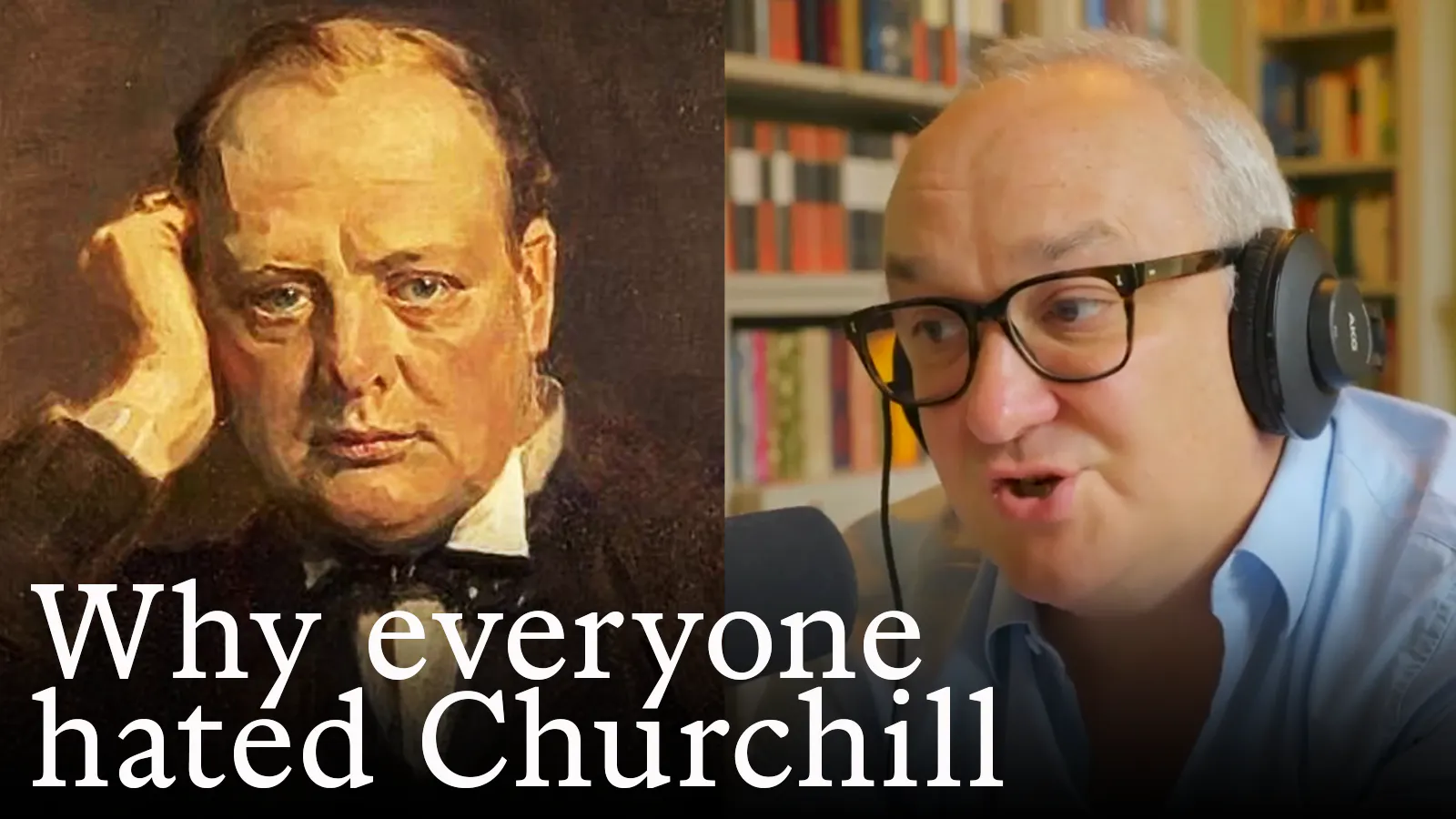
Listen to episode
Episode Summary
In this episode, the hosts discuss the historical context and implications of the Gallipoli campaign during World War I, focusing on the experiences of Australian soldiers, particularly John Simpson, who became a legendary figure for his bravery in rescuing wounded comrades. The episode highlights the challenges faced by troops, including harsh conditions, dysentery, and the impact of leadership decisions, particularly those made by Winston Churchill. Additionally, the hosts explore the political ramifications of the campaign and the eventual fallout for Churchill and the British government.
Key Topics
Full Transcript
This episode is brought to you by Lloyds Business and Commercial Banking. One of the great things about finance is that it may result in you having to pay tax and this was a constant grumble in Anglo-Saxon England, which was the most heavily taxed country in the whole of Christendom and just when the Anglo-Saxons thought it couldn't get any worse, they got conquered by King Canute and Canute imposed a tax rate that was effectively 100%. Yeah, well, that was one very big change, Tom, but another tax change is upon us and this is the advent of making tax digital for income tax and if you're at all concerned about it, this is where Lloyds come in because they're here to help make that change much simpler for you with a useful HMRC-recognized accounting tool that will help you stay in line with all the making tax digital requirements. And the brilliant thing about this is that it is free for Lloyds business account customers, so when it is time to digitize your income tax, you can bank on Lloyds. Search Lloyds Business Accounts to find out more. This episode is brought to you by Christopher Nolan's epic new film, The Odyssey. It's Gary here from Goal Hangers, the rest is football. Building a truly elite squad isn't easy. You need a world-class director, seasoned veterans leaning on their experience and those generational talents who change the game. It's a challenge Christopher Nolan clearly enjoys. He's put together a formidable side for his new blockbuster, The Odyssey. You've got Matt Damon leading as Odysseus, a man facing a 10-year battle to get home to his family following the Trojan War. And the standard of actors around him is on another level. Tom Holland, Anne Hathaway, Robert Pattinson, Lupita Nyong'o with Zendaya and Charlize Theron all on the same pitch. Christopher Nolan's fresh take on this classic is going to be a generation-defining cinematic event. And for the first time ever, the entire film has been filmed with IMAX cameras, so it's built for the biggest screen possible. We've quite literally never seen anything like it. The Odyssey in cinemas July 17th. Book your tickets when they go on sale June 15th. Changes in sexual performance are more common than most people realize, and support doesn't need to feel awkward. With MedExpress, everything happens privately online. Start by completing a short consultation reviewed by UK-registered clinicians. If eligible, treatment is delivered discreetly to your home, with ongoing support whenever you need it. You're not alone in this. Visit medexpress.co.uk slash podcast to learn more. My dearest son, I received your very kind and welcome letter, dated April 23rd yesterday, and I was very thankful for it. But my dear lad, it was a very great disappointment to me that you were not sent to either France or England as you expected, but I read later on that a fleet had been sent to the Dardanelles and I made sure that it was the Australians, and I was right. Well my son, the Australians have done gloriously. They have made England ring with their bravery. Mr Asquith said in the House of Commons that the Australians had fought like heroes and that they had surpassed themselves in the annals of British warfare with their bravery. Jack, my son, my heart is fairly bursting with sorrow and with pride to think that you are amongst such a lot of brave men. Now my dearest son, hoping and trusting that the Lord in his great mercy will guard and protect you in these terrible times, and that he will hear my prayers for you from your ever-loving and affectionate mother. So that was Sarah Fitzpatrick, a widow who lived in South Shields in Tyne and Wear in Northern England. Despite that she was, as you could tell from my expert accent and artwork there, Scottish, and she was writing to her son Jack in May 1915, and this letter that she wrote to Jack was found on Jack's body after he was killed by machine gunfire at Anzac Cove on the 19th of May 1915. He was one of perhaps 150,000 men who died on the killing fields of Glippoli, but he may well be the most famous, and Dominic, why, for those who are not Australian, why is he so famous? So the answer is that even though he was born to Scottish parents and he grew up in the northeast of England, Jack Fitzpatrick, as he was born, became one of the most celebrated Australians of the century. When he was 17 he ran away and joined the Merchant Navy, and then he deserted when he got to New South Wales and he became a coal miner and a gold digger and a ship stoker and all these kinds of odd jobs. And then when war broke out in 1914 he enlisted in the 3rd Field Ambulance of the Australian Imperial Force, but under his mother's maiden name, so he called himself John Simpson. And he thought, as you can tell from his mother's letter, that he would be going back to England or to France, but as we heard last time the Australians were in fact sent to Glippoli. And there this guy, born Fitzpatrick but now calling himself Simpson, he became famous for using donkeys to carry wounded Anzacs down from the ravines on the front line back down to the beach. And he became a kind of cult hero for the Anzacs with his donkeys. He was said to have rescued 300 men, and then a month into the operation, on the 19th of May, he is shot and he becomes a sort of patriotic martyr. So in Anzac mythology he's a poor boy who's made good, he is an everyman who has sacrificed himself for his mates, and of course this image of somebody with a donkey, it kind of plays into established images of saintly figures or martyrs or messiahs who are travelling by donkey or by mule or whatever. And so he becomes the supreme embodiment, the incarnation of something that was created at Glippoli, which is the Anzac spirit. So if you look him up in the Australian Dictionary of Biography, it says of him, Simpson and his donkey became a legend, the symbol of all that was pure, selfless and heroic on Glippoli. So he is the Anzac spirit made flesh, Tom. That's why he's so celebrated. Incarnate. Exactly. And we'll come back to the Anzac spirit and how that was created and what all this meant for Australian national identity later in this episode. But maybe first we should remind ourselves what on earth are tens of thousands of Australians and New Zealanders, as well as hundreds of thousands of British and Irish soldiers and in total almost 80,000 Frenchmen. What are they doing on the coast of Turkey in the spring of 1915? Nothing useful. Well, I mean, I don't want to diss their contribution, but they have been thrown away in a very misguided operation. It's an operation conceived by the first Lord of the Admiralty, Winston Churchill, to force the Dardanelles, the straits between Europe and Asia, the straits that lead from the Mediterranean to the Black Sea. He thinks he's going to force the straits with his ships. He thinks he's going to bombard Constantinople, knock the Ottomans out of the war. The naval campaign doesn't work. The Asquith government doubles down. They send ground troops to take the European shore of the strait. That's the peninsula of Gallipoli. As we heard last time, they landed at two points. Then as the Anzac Cove on the western side of the peninsula and a Cape Helles on the southern tip, the landings much bloodier and much more difficult than they imagined. The Turks have been rallied, not least by their young commander, Mustafa Kemal, and the Allies haven't come close to reaching their objectives. We left them with night falling on the 25th of April. They're clinging to these fragile footholds, these beachheads, and Sir Ian Hamilton, the commander, has told them, dig yourselves right in and stick it out. Dig, dig, dig until you're safe. That's what they're doing. They're digging trenches. Even though it's kind of dust over rock, basically. Exactly. As we'll find out, very shallow and insalubrious trenches. So what now? Now, remember that just two months ago, Winston Churchill told the War Council, we can make certain of taking Constantinople by the end of March and capturing or destroying all Turkish forces in Europe. Over-optimistic, right? A little bit over-optimistic because they are not going forwards. Two days after the landings, the Ottomans launched a big attack on the Anzacs on Anzac Cove. They're trying to drive the Australians and New Zealanders back into the sea and the Anzacs perform heroically. They managed to fight them off, but they are definitely not going forward. The British and French further south at Cape Helles, they do try to go a little bit further forward. On the 28th of April, they made their first attempt to capture the next village in line, which is a village called Krithia. It's about five miles inland from their beaches. This time, the Ottomans hold them off. By dusk, when the fighting dies down, the British and French have lost about 3,000 men for very little gain. This basically is the pattern for the next few months. It's very similar to the other fronts that we've talked about in this series, the Western Front in France and Flanders or the Italian Front, where basically you have trenches, you have machine guns, you have barbed wire. If you attack these things, you will probably be killed. Because that's been the pattern throughout the whole war, that the Germans, when they invade France, are putting a premium on speed. The Italians, when they try and knock out the Austro-Hungarian Empire, they're putting a premium on kind of dash and all of that. Churchill is part of that continuum, isn't he? Every attempt to deploy the kind of Napoleonic sense of speed and surprise runs into barbed wire and machine gun fire and slaughter. And basically, this is what military historians always say about First World Generals. They're on a massive learning curve, and it takes some of them longer than others to work it out. So in Gallipoli, just over a week after the First Battle of Corfu, the British and French have another go, a second battle. Two days of heavy fighting, and this time they lose almost 7,000 men, and they gain at most half a mile. Because this is the definition of insanity, isn't it? Just doing the same thing over and over again in the expectation that it will change, and of course it never does. But the issue for them, of course, is if you don't do that, what do you do? I mean, they are stuck there. If they continue attacking at this rate, they will A, run out of shells, and B, run out of men. I mean, they'll all be dead by mid-summer if they carry on like this, and this is terrible because Britain needs its forces on the Western Front, because that's where the war is going to be decided. But on the other hand, the Turks can't get rid of them. They are too well dug in. So when the Turks later in May launch another attempt to push the Australians and New Zealanders into the sea, and they've got twice as many men, the Turks, at Anzac Cove, again, defence wins. Defence always wins. So this time it's the Anzac machine guns that are ripping through the Turkish attackers. So on the 19th of May, the Anzacs lost fewer than 700 men, but the Turks lost probably 10,000 men. So basically, the Turks have launched this big attack, will drive them into the sea. It has not worked. And as night falls, the no-man's land outside the Anzac lines is littered with thousands of dead bodies, and they are, you know, it's hot, it is hot in Turkey in the summer. They are rotting in the summer heat, they are covered with flies, there's this dreadful stench of decomposing bodies, and it's a massive health hazard. And this actually is the cue for one of the most celebrated moments of the whole Gallipoli campaign, and this is, it's a little bit like the Christmas truce. So this is a day-long ceasefire, a day-long truce between the Anzacs and the Turks. And the guy who organised this, or one of the main organisers, was somebody we actually met in a previous First World War series, about 1914, and he was a Conservative MP and British officer called Aubrey Herbert. And he was an amazing character. I mean, he's basically you, isn't he? He's very similar. I was waiting for this, yeah. He went to Balliol, first class history degree, travelled through the Balkans, speaking every Balkan language, all the other major European languages, Turkish, Arabic, Albanian. He goes to Yemen dressed as a tramp, which you haven't done. No, I've not done that. But pretty much everything else. He's the model for the kind of the top spy in Greenmantle, which we talked about in the previous episode. Sandy Arbuthnot. And also, I hadn't tweaked this, he's the younger stepbrother of the Lord Carnarvon, who after the war will discover Tutankhamen. Oh, I did not know that. Oh, that's interesting. So he's born at Highclere, which is Downton Abbey, so it all links. He's just an absolutely amazing man. We had a description of him at the Battle of Mons being captured by Germans. He ended up escaping from the Germans. Of course. He speaks Turkish, and because he's the master of tongues in the Balkans. He is you. He wangles a job as a staff officer and interpreter for the Australian commander, General Birdwood. So like me, he's very fond of Australians and Australia. And also, he gets somewhere with Turks, as I do. So an Australophile, Turkophile, Balkan old hand who went to Baleo. I mean, this is just spooky. It's uncanny, isn't it? So he takes the lead in the negotiations with Mustafa Kemal, and they'll have a formal ceasefire on the 24th of May so they can all bury their dead. And they both of them sent out, the Turks and the Anzacs sent out groups with white armbands that marked a line down the middle of no man's land. And there's a lovely description from Corporal Charles Livingston of the New South Wales Light Horse. He says, we stood together some 12 feet apart, quite friendly, exchanging coins and other articles. A Turk gave me a beautiful Sultan's Guard belt buckle made of brass with a silver star and crescent embossed with the Sultan's scroll in Arabic. All I had to give him in exchange were a few coins. That's poor from the Australians. Our troops carried the dead Turkish bodies over the dividing line and the Turkish troops did the same for our dead. So that's nice. Now people may be thinking, while they're burying the bodies, what are the other Australians doing? Are they having a barbie? We know how Australians behave. This is Private Victor Laidlaw wrote in a letter, everybody's taking advantage of the armistice to do anything they want to do out of cover. A large number are down bathing and you think today was cup day down at one of our seaside beaches. So basically you've just gone to the beach. So brilliant, so brilliant. But then as dusk falls, the Turks start firing again, as Corporal Livingston says, we were once again enemies and indeed they are. So the similarity there with the Western Front and the Christmas Truce, the similarities go beyond the ceasefire, because actually what's happened now is the trenches have become institutionalized as they were in France and Flanders. So they've dug front lines, they've dug reserve lines, they've dug communications trenches. And when you look at the soldiers accounts from Gallipoli, there are some things that are very familiar. So there's the thud of the guns, the crump, I believe you are, you are required to say crump. I knew you were going to say crump at that point. There's the threat of sniper fire. There's the knowledge that, you know, you poke your head up at the wrong moment and you're dead, all of that. But veterans consistently said if they did both, they said Gallipoli was worse than the Western Front, that the terrain is different. So the trenches are much shallower. The dugouts are much more primitive. The temperatures are more extreme, so hot in the summer, so cold in the winter and everything is covered. You know, you're close to the sea, there's a sea wind. Everything is covered with this layer of dust. Because of the terrain, there is a constant problem of burying the dead. You can't, basically, it's very difficult to do. And because of snipers, you can't go and get bodies easily. So there's only that one day of a ceasefire and then there aren't any more, no formal ones. So the bodies by and large just lie there, rotting on the parapets or rotting in no man's land. Asquith's son, Arthur, who was called Ock, he was there at Gallipoli. And he wrote later, he said, bodies lay everywhere, unburied and half buried. The weather was sweltering, the stench overwhelming and many of our officers and men were sick again and again. I mean, they're vomiting because of the smell. Even more than on the Western Front, the bodies attract colossal quantities of flies. This is a private, looking back. The whole of the side of the trench used to be one black swarming mass. They'd bring you open like a tin of bully beef would be swarming with flies. They were all around your mouth on the cuts or sores that you got, which then turned septic. And immediately you bared any part of your body. You were smothered. It's the worst Mediterranean beach holiday ever. It is. It is. And it's actually, I mean, here's another thing. There is undoubtedly an aspect of misguided and unfortunate Mediterranean beach holidays. It's the issue of toilets. And it may seem odd to talk about this, but basically, this is one thing that veterans always mentioned. They said, you know, when you look back at Gallipoli, of course, the Turks and there's machine guns and stuff, but the toilet thing is huge because on the Western Front, there is wood, there is space, there are supplies of disinfectants and whatnot. At Gallipoli, there are basically no toilet facilities worthy of the name and they don't have any toilet paper. So men would use letters from home. I mean, that must have been awful for them to do because the letters are so much to them. But then when they ran out of letters from home, they use their bare hands to wipe themselves. And then they would wipe their hands in the dirt or they'd wipe them on their clothes. And as a result of this, they're absolutely ravaged with dysentery. And this seems an odd thing, again, to talk about so much on a history podcast, but it's a central element of the kind of the Gallipoli experience. Well, I mean, dysentery, you could do an entire history of the world in terms of dysentery. Most people who ever died, died of diarrhea. Because we did that series with Karl Harper and he made exactly this point. That blew my mind. That point. I've bored people with it ever since so many people in history died of diarrhea. I mean, soldiers who survived Gallipoli said afterwards, you know, this was the defining aspect of the experience that we would literally and you would be sitting there with really hard men who were in tears, sobbing with the kind of pain and humiliation to quote one. We wept not because we were frightened, but because we were so dirty. So a good example of somebody who might seem the incarnation of kind of buttoned up dignity and that Clement Attlee, the future British Labour prime minister, a captain in the South Lancashires. He got dysentery at Cape Helles. He fainted because he was so weak from the dysentery. He was taken back to the beach and invalidated out to Malta. And then incredibly, I mean, great credit to Attlee. He was so keen to rejoin his comrades that he got himself sent back to Gallipoli and came back in the autumn. He just was very laconic, as was his way. He said, yes, I had dysentery, and then he just changed the subject. But actually, some of the stories are horrendous. And this is one story always stuck in my mind since I first read it. Ordinary seaman Joe Murray was in the Royal Naval Division, and it goes as follows. He says a couple of weeks before getting it, my old pal was as smart and upright as a guardsman. Yet after about 10 days, it was dreadful to see him crawling about his trousers around his feet, his shirt all soiled. Everything was soiled. He couldn't even walk. So I took him by one arm, and another pal got hold of him by another, and we dragged him to the latrine. We tried to keep the flies off him and to turn him round, to put his backside towards the trench. But he simply rolled into this foot-wide trench, half sideways, head first into the slime. We couldn't pull him out, we didn't have enough strength, and he couldn't help himself at all. We did eventually get him out, but he was dead. He had drowned in his own excrement. I mean, there are lots of stories like this. It's not Achilles, isn't it? It's not a good way to die, it's not even Rupert Brooke. So loads of English language accounts. Actually in English language accounts, the Turks are barely mentioned, but we know that their conditions were really grim as well. Mustafa Kemal wrote to his Italian mistress, our life here is truly hellish. But then he added, fortunately, my soldiers are very brave, and they are tougher than the enemy. I mean, that sentence would have astounded the British planners before the campaign, because they were convinced that the Turks would run away. And Mustafa Kemal then has this fantastic line, he says to his mistress, the great thing about my soldiers is so many of them are very devout Muslims, so they're not really frightened of death. They know they will, quote, go straight to heaven. There the Huris, God's most beautiful women, will meet them and will satisfy their desires for all eternity. What great happiness. I think he's being ironic there. He is being ironic, of course, because Mustafa Kemal had a very semi-detached relationship with his own fate. To put it mildly. Exactly. So he's clearly been quite right about this. Anyway, this is the general situation at Gallipoli. It's a total stalemate. Flies everywhere, excrements everywhere, it is horrendous. Now what of the man who was responsible for all this, who came up with this great scheme, Winston Churchill? Back in London, Churchill is absolutely unrepentant. He's still telling everybody that the campaign can be won. But the newspapers are beginning to turn against him. So for example, the Tory Morning Post calls him a danger to the country. And that is because his first sea lord, Jackie Fisher, is now actively briefing against him and leaking bad news about Gallipoli and basically telling everyone that Churchill's got to go. So he's the kind of small guy who's yellow. He's yellow. He likes dancing, likes church, but he's also too old and is very disputatious and difficult. Now also some of the people in the Liberal government are beginning to lose faith in Churchill. George told Margo Asquith at the beginning of May, Churchill has not merely bad judgment, he has none. His Dardanelles expedition gave the Turk a frightfully long start. He got us at war with the Turk, which he need never have done. And so a few days after that, you have a succession of events which rock the Liberal government and put Churchill's own place in great jeopardy. So first of all, we already described how Asquith was distracted through all this because of his infatuation with Venetia Stanley. On the 11th of May, Venetia Stanley tells Asquith that she's going to marry one of his ministers, Edwin Montague. And Asquith is absolutely devastated. He is heartbroken. He is a wreck of a man once she's told him this. It's almost as bad as suffering dysentery on an exposed hill in Gallipoli. Asquith is the real victim in all this. Yeah, he really is. And that will run throughout the rest of this episode. Asquith is basically a shadow of a man now. The very next day, the 12th of May, Jackie Fisher makes his seventh attempt to resign. And again, they have to persuade him not to. And the newspapers are now full of rumors that the Asquith government, which doesn't have an overall majority, and they haven't had one since the beginning of the war. And basically, there'd been a sort of political truce since the beginning of the war. But now the conservatives are running out of patience. The rumors that the Asquith government is going to collapse. Two days after this, on the 14th of May, The Times publishes this, I mean, there's no other word but a bombshell, bombshell report that the British troops on the Western Front are running out of high explosive shells and that this is because of government incompetence. And again, rather like the Jackie Fisher stories, this is the result of leaks and briefings from within the government. So it's come particularly from Sir John French, the commander on the Western Front, who's in cahoots. Is it true? Yes, they were running out of shell. Everyone was running out of shells. I don't think it was that Britain was peculiarly incompetent. Every competent by the spring of summer of 1915 is basically running out of shells because they've used all their pre-war supplies. But in Britain, this is used as a weapon to expose what the critics of the government see as its kind of latitude and, you know, Asquith is reading the classics and having his hair cut and going to society parties, and they think he should be chairing munitions meetings and being more serious. So the same day the shell story breaks, the War Council meets in what Churchill later called a sulphurous atmosphere, and they discuss, are we going to pull out of Gallipoli? And Lord Kitchener, the war secretary, repeats his point. He says, no, we cannot pull out even now. It would destroy Britain's prestige in the Muslim world. It will lose us the possible support of the Balkan neutrals, people like Romania, Bulgaria, whoever. We just have to keep going. To what end? Well, this is the point. I mean, don't ask me. I'm not Lord Kitchener. I mean, I put it to you. This is nonsense. It is nonsense. I wouldn't have gone in the first place. Let me be absolutely clear. I mean, I'm going to put it on the record. I do not have as distinguished a military record as Lord Kitchener. But it seems to me madness. Because even if you push the Turks, if you, the Turk, sorry, off Gallipoli, so what? Yeah, well, exactly. That's the whole point. So what? Then you still got that. And don't forget, this is a side quest. It's not even the main quest. It's mad. It is mad. So the next day, 15th of May, Fisher finally does resign and in pleasingly bizarre and ludicrous circumstances, he sends a resignation letter to Asquith. He says, I was against Gallipoli from the start. It's mad. You've made fools of yourselves. I'm off. And then he vanishes. He leaves the Admiralty and disappears. And some historians think because he was very religious, he went to pray at Westminster Abbey, whatever it takes. Anyway, Asquith sends men after him to try to persuade him out of resigning. I mean, again, it's rather like the Kitchener. They've employed these sort of old war horses who are useless, but then they don't want them to resign because it would look really bad. The sort of PR would be really bad. Yeah. So it's like Kitchener doesn't want to withdraw from Gallipoli because it would look bad. They don't want to attack Fisher because that would look bad. So they just nail to these mad appointments and strategies. Exactly. Exactly. So Asquith sends men to track. They track Fisher down at the Charing Cross Hotel and they hand him a letter from Asquith. And Asquith commands him to return to his post in the name of the king, which is a great thing to write. Fisher says, well, I'll only return on the following conditions. You will withdraw from the Dardanelles and you will sack Churchill, quote, a bigger danger than the Germans. And Asquith says, oh, no, no, that's too much. And Asquith then says to the king, Fisher's gone mad. I'm going to accept Fisher's resignation. But this turns out to be the trigger for the fall of the government, because as we said until now, there's been a truce between the two parties. But the Tory leader, Bonar Law, he says to Asquith, look, Fisher going, my backbenchers, the ordinary Tories will no longer accept Churchill at the admiralty. And so the next few days in Westminster are dominated by these serpentine machinations. To cut a very long story short, Asquith, Lloyd George and Bonar Law, the Tory leader, agree to form a coalition government. And Asquith can stay on as prime minister, but he has to make two sacrifices. One of them, he has to sack one of his closest friends, Lord Haldane, the man who had modernised Britain's army before the war, who's now Lord Chancellor. Haldane has been smeared by the press as pro-German, because he had the effrontery to have studied philosophy at the University of Göttingen, and so can't trust a man who's studied philosophy in Germany. And so basically, this is a terrible, I mean, I'm a big Asquith fan, but this is very, very bad behaviour from Asquith. He has to sack one of his closest friends. No greater love hath a man than to lay down his life for a friend. Yeah. And then the Tories say, we want to get rid of Churchill. We hate Churchill. Churchill used to be one of us. He's a traitor. He's a snake. He goes around making mad speeches. He's a braggart. He's totally unreliable and mad. Get rid. And the funny thing is, you know, Churchill, obviously, you know, the greatest Briton, whatever. He is, at this point, unbelievably unpopular across the political spectrum. So Asquith, when he's debating this with his wife, Margot, he said, Churchill is by far the most disliked man in my cabinet by his colleagues. Oh, he's intolerable, noisy, long-winded and full of perverations. Lloyd George said to his mistress, this is Churchill's own fault. You know, he saw in the war the chance for glory for himself, and he's entered on a risky campaign without caring a straw for the misery and hardship that it would bring to thousands. I mean, Lloyd George is quite right about that, by the way. George V wrote in his diary, he said, it'd be brilliant to get rid of Churchill from the admiralty. He is the real danger. So basically, the deal is, they'll get rid of Churchill, they'll also get rid of Fisher, all of this. Asquith will stay on as prime minister of a coalition government. I mean, presumably now they've got rid of Churchill. That's brilliant. They can say it's all been a disaster, pin the blame on him and, you know, cut your losses. This is the insane thing, right? This is absolutely bonkers. The same day as all this is going on, the 17th of May, Sir Ian Hamilton sends a cable to the war office from the Aegean. He says, we've tried to break out of our beachheads. The Turks have resisted much more stubbornly than we expected. The troops have done well, but they are absolutely exhausted. We need, if you're going to keep us here, we absolutely need reinforcing as soon as possible. But because of the political crisis, no one answers. And in fact, they don't answer for weeks. The war council doesn't meet again until the 7th of June, which is almost a month later. And then if they do decide to send reinforcements, it would take weeks to get them there. So basically, for the next six weeks, these poor blokes at Gallipoli with dysentery are stuck in their trenches. The Turks shooting at them and they're waiting to find out what happens at Westminster for the politicians to sort themselves out and to get their act together. And what makes that worse is that Churchill won't go. So he's still fighting to cling on to office. He drafts a public letter saying none of this is his fault. It's all Fisher's fault. He has a massive strop and a tantrum with Lloyd George, who had once been one of his closest friends. Churchill's so self-regarding. You don't care what becomes of me. You don't care for my personal reputation. Lloyd George says, no, I don't. I only care about winning the war. And then this brilliant thing. He gets Clemmie to write Asquith a letter, a tear-stained letter. Why would you part with Winston? You will be committing an act of weakness. Your coalition government will be rubbish and all this kind of thing. Asquith, there's some excellent cattiness now. Asquith shows this letter to his wife, Margo. And Margo is, what's your expression, a baggage. And Margo's a massive baggage. She is like the world's most. She makes Virginia Woolf look democratic and open-minded. So a baggage, not a spitfire. She's both a baggage and a spitfire. She's the worst kind of baggage. Yeah. And the worst kind of spitfire. Asquith shows Margo this letter from Clemenzine Churchill. And Margo says, it shows the soul of a servant. That touch of blackmail and insolence and the revelation of black ingratitude and want of affection justifies everything I've thought of this shallow couple. And Asquith says, basically, that's going a bit far, isn't it? It's the letter of a wife. And Margo says, a fishwife, you mean? Yeah, she is a spitfire and a baggage. No question. Anyway, Churchill's basically dragged out of the Admiralty on the 25th of May. He's fobbed off with a kind of non-job, Chancellor of the Duchy of Lancaster. Most officers in the Navy were delighted that Churchill had gone. Admiral Jellicoe wrote to Fisher, we owe you a debt of gratitude for having saved the Navy from a continuance in office of Mr. Churchill. Admiral Beatty, the Navy breathes freer now that it is rid of the succubus. Churchill is gutted. I mean, Churchill goes around saying to everybody, you know, I'm I'm I'm finished. I've been totally humiliated and all this. And Clemmy said later on to one of his biographers, I thought he would never get over the Dardanelles. I thought he would die of grief. And there were some people who thought that Churchill might actually take his own life, that he was so crushed and depressed by his public humiliation. But he signs up and goes off and fights. He does indeed. And we'll just we'll come to that a little bit later. Now, Callipoli, they're still waiting for news. They launch a third battle of Krithia under Sir Elmer Hunter-Weston with his excellent moustache. Classic kind of First World War behavior, bombardment over the top. They get about 200 yards and then basically, yeah, the Turks kill them all. They lose about 6000 men. The Australian writer Les Carlyon said that General Hunter-Weston, he was one of the Great War's spectacular incompetence. He threw away men the other way that other men tossed away socks. And is that fair? I mean, I get the sense it is probably. I think it's actually a bit harsh. I think blaming the generals for this is too harsh. I think they're in an impossible situation and it's, you know, it's Churchill's fault. It's not their fault. I think they what do they do? I mean, they can't just they can't just sit there and do nothing. So, yeah, I think they're in an impossible situation. And it's the politicians fault for putting them there, frankly. But they are throwing away men that men the way other men toss away socks. I mean, they're always throwing away men. Yeah. But I mean, they keep thinking to themselves, well, maybe next time. No. And never. Yeah, of course. I mean, the bonkers thing is, Churchill still won't shut up, even though he's been booted out. So the day after this battle, he was in Dundee addressing his constituents. And he said, through the narrows of the Dardanelles along the ridges of the Gallipoli Peninsula lies some of the shortest paths to a triumphant peace. Beyond those few miles of ridge and scrub on which our soldiers, our French comrades, our gallant Australians and our New Zealand fellow subjects are now battling, lie the downfall of a hostile empire, the destruction of an enemy's fleet and army, the fall of a world famous capital and probably the accession of powerful allies. And that's just bonkers from him. When he's coming out with that kind of stuff in the Second World War, it's great. And your heart soars and you feel a great patriotic glow. When he's coming out with that stuff in the face of a disaster like this, you just think that's mad. Of course you do. It's kind of bogus. The language is over-inflated. Yeah. You know who he reminds me of there? And this will... I mean, who he undoubtedly is like. He is Boris Johnson at this point. Yeah. Talking about Ukraine and everything that Britain should be doing for Ukraine. We haven't actually got any arms because his government has failed to invest in it. He's making wild promises and claims in the most grandiose rhetoric while back in the office. The people working with him are in tears of frustration and rage because he's embarked on a course that's just utterly self-destructive and suicidal. But he's not the only one because two days later, the new coalition has set up a new war cabinet which they call the Dardanelles Committee, a sign of how important the Dardanelles now is to them. And they said, well, what will we do? Shall we finally cut our losses? No, we won't. We'll actually send more men. So they say, we will send Sir Ian Hamilton, his reinforcements. We will send four new divisions of Lord Kitchener's new army. And the generals on the Western Front say, are you mad? When we need men so desperately against the Germans, why would you waste men on this mad lunatic scheme? So Douglas Haig, not an uncontroversial general himself, said at the time, they said you could send the entire British army to Gallipoli and it wouldn't make a blind bit of difference. You're never going to get a fleet through those straits. You're never going to capture Constantinople. You're never going to knock the Ottoman Empire out of the war. You are deluding yourselves. And I quote, I think it is fatal to pour more troops and ammunition down the Dardanelles sink. But maybe he's wrong. Yeah, maybe. Maybe it'll work. Maybe one more heave will do the trick. Yeah. The date for the reinforcements to land is set for the 6th of August. Ottoman is planning to land almost 30,000 fresh troops at Suvla Bay, which is just up the Gallipoli coast. And at the same time, the Anzacs will launch a massive breakout to capture the high ground in the center of the peninsula. Well, I think when you put it like that, that might work. Yeah. I mean, that's sounding promising. These are the stakes. If this works, I think this could change the course of the Gallipoli campaign. Which you know what it would result in? It would result in the downfall of a hostile empire, the destruction of an enemy's fleet and army, the fall of a world famous capital and possibly the exception of powerful allies. I think this could be the moment that wins the war. First World War, as everyone knows, ended in 1915. We'll be giving the details of that after the break. Brilliant. This episode is brought to you by Disclosure Day. The new movie Disclosure Day is directed by legendary filmmaker Steven Spielberg. And now with Disclosure Day, Spielberg is back with another movie which asks the fascinating question, what would you do if you found out that we here on planet Earth were not alone? See, I feel quite good about it because I've actually been prepping for some years. So I've laid up stores, I've got weaponry, I'm ready. When the aliens attack, I will be able to fight back with the arsenal at my disposal. So I'm excited about it. But Dominic, you are not actually appearing in this cast because the cast is a really extraordinary one. Clearly, Spielberg didn't need you because he's got Emily Blunt, he has got Colin Firth, he's got Josh O'Connor, he's got Coleman Domingo. And it's a completely gripping and original story. And absolutely, it demands to be seen not on TV, but on the big screen. Disclosure Day is in cinemas Wednesday, June 10th. So book your tickets now. It's nearly that time, everyone. The rest is football will be on Netflix every day for the world's biggest tournament. Join myself, Alan and Micah for daily debates, unfiltered takes and the most special of guests. All from the heart of New York City. Yeah, that's right. We're excited to see you soon. This is a paid advertisement for better help. You know, we tend to think that summer stress belongs to our age, disrupted routines, crowded social calendars and the pressure to make every sunny day count. But even the ancient Greeks and Romans had their own fears about this summery time of year. They called this time the Dog Days because they linked the rise of Sirius the Dog Star with fever, lethargy and madness. The Romans blamed dog shaped constellations. But today we recognise summer stress for what it is. The strain of doing too much. And the fear of doing too little. You don't have to say yes to everything this summer. Find support in therapy. Sign up and get 10% off at better help dot com slash rest is history. That's better h e l p dot com slash rest is history. Hello everyone. Welcome back to the rest is history. It is now the late summer of 1915. Gallipoli has been a total mess, but it's OK because the British government are sending reinforcements and this will undoubtedly enable the allies to take Constantinople and to end the war in triumphant circumstances. Isn't that right, Dominic? That's what history tells us happened. It is indeed. So to remind people about a plan, they're going to land 27000 fresh troops at Suffolk Bay, which is on the western side of the Gallipoli Peninsula, so the Aegean side. Meanwhile, those allied forces who are already on the peninsula, Cape Helles and Anzac Cove, they will launch a series of attacks from their beachheads. This is known as the August Offensive, and they will push the Turks back. They'll capture the Turkish trenches and they will seize the hills and the ridges that are further inland. So the commanding heights of the Gallipoli Peninsula and all this is scheduled to begin on the evening of the 6th of August. And a big spoiler alert now, it doesn't go entirely according to plan. So if we begin with the landings at Suffolk Bay, the same old story. Basically, they do get the troops ashore, but they're under punishing Turkish fire. It's all a bit chaotic. Some of them arrive at the wrong point or the timings are wrong. They take very heavy casualties and they don't make much progress at all. Basically, like before, all these blokes get stuck at their beachhead. They're pinned down. It's baking heat. They don't have supplies. They don't have any fresh water. And when they try to get inland, the Turks drive them back with their machine guns and with bayonet charges and things. I mean, I suppose to be fair to them, there's no way they could have worked out that that's what was going to happen. Because it's not like anyone's tried that before. How are they to know? And it's the same bloke who drives them back, who drove them back before, Mustafa Kemal. So he wasn't the initial commander at Suvla. There was another bloke, another Turk. He was sacked after a few days because of inertia. Mustafa Kemal was sent in. Mustafa Kemal had been in the trenches all this time. He was delighted to be leading the counterattack. He said, for four months, I lived 300 meters away from the firing line, breathing the fetid smell of corpses. Having left in dungeon-like darkness at 11 o'clock that night, I was able to breathe clean air for the first time. So he's having a tremendous time, although history might have been very different, because at one point he's hit by a piece of shrapnel in the chest. And the story goes, if you read in admiring biographies of Mustafa Kemal by Turkish historians, that he was saved by his watch. How did that work? Because the shrapnel hit him and he had his watch in his pocket. Oh, I see. Oh, right. Had that not happened, then who knows? Turkey might not exist. Huge swathes of Turkey would be speaking Greek. The other big story of the day is the Australians and the New Zealanders' attempt to break out of the Anzac Cove beachhead. You say there is another story that follows this, but we'll come to that when you've told this bit. So they're trying to break out of Anzac Cove. There's a whole series of battles that some of our Australian listeners will be very familiar with. All these places called Lone Pine, Dead Man's Ridge, or The Neck. And they go down, an Australian kind of legend, basically they charge out and they're machine gunned by Turks. Sergeant Cliff Pinnock of the Victoria Light Horse said, they were waiting ready for us and they simply gave us a solid wall of lead. I was in the first line to advance and we didn't get 10 yards. Every one of us felt like lumps of meat. All your pals that have been with you for months and months, blown and shot out of all recognition. So to cut a very long story short, this breakout attempt lasts four days. The Australians, you know, they fight heroically, but they lose more than 12,000 men killed or wounded. And it's, you know, they're basically pushed back into their beach head. And in the film, Gallipoli, the Peter Weir film that made Mel Gibson's name, it is claimed in this film that while the Australians are fighting and dying like lions, the British are playing in the sea and drinking tea on the beaches. This is a lie, a shameful lie. It's astonishing that Mel Gibson would associate himself with. Well, I think the phobic propaganda, Mel Gibson really does hate Britain, doesn't he? He absolutely hates Britain. Well, let's be more precise. England. Yes, he does. I mean, can I tell you why he's wrong? Yeah, I do. He is overlooking what is the most significant episode in the whole Gallipoli campaign. I'm amazed you left this out. And this is the fate of the Sandringham company. And these were basically estate workers recruited from the royal estate in Norfolk, in Sandringham. And they're going off to serve king and country in Gallipoli. And they get sent to, as part of this kind of attack, to try and force the Turkish lines. And they march into a wooded, heavily defended area. And as they're pushing towards the Turks, they are lost to sight and sound. And a New Zealand forces engineer watches them go. And he says that a low-hanging cloud, which is loaf-shaped, descends, and it envelops the battalion. And then it kind of goes up. And when the cloud has gone, the battalion has gone as well. So there are two theories as to this. One is that it's a hallucination, a result of the mist and the gunfire and the shell smoke and everything. Yeah. Also, I'm sure you're driven mad by dysentery. Yeah. Or they're dropping dead of dysentery or whatever. So they are kind of wiped out and they're never found. But the other theory, which I think is much more plausible, is that this is a UFO, a flying saucer that has descended and is interested in picking up human specimens for a future study. And they've come down. And they've kind of picked up all the Sandringham estate workers who are now in the army and gone off whatever. And this was my introduction at the age of nine to the Gallipoli campaign. I read a whole book about it. Wow. It was a New Zealander who came up with this? Yeah, basically. The people from New Zealand are usually very level-headed. Well, I don't think he said that it was a flying saucer, because obviously people didn't know about flying saucers until after the Second World War. But it's a retrospective interpretation, this peculiar loaf-shaped cloud. Right. And actually, there was a BBC drama about it with David Jason as the commander of the Sandringham. Wow. He was like Carson in Downton Abbey going to war. So anyway, I just throw that out. All right. Flying saucers aside, where are we now? So Hamilton has got his reinforcements ashore. On the other hand, he hasn't made any dent in the Turkish defences, really. The tactical balance hasn't changed. Basically everybody now knows this is an unbreakable stalemate and it's, you know, this is basically trench warfare at its most tedious, at its most gruelling and attritional. We're into the summer. It's swelteringly hot, blistering sunshine. They're all incredibly badly sunburned, the flies everywhere, the bodies rotting. The dysentery is actually worse than ever. As Peter Hart says in his brilliant book, you know, they can look out, they can see the hospital ships at night with the lights twinkling in the darkness. But all Gallipoli had to offer them was unending misery, disease and the threat of death. So after the Suffolk landings, two other important things happen. So number one is there has been a big, another of these bidding wars with the Ottoman Empire's neighbour Bulgaria. The Bulgarians have been shopping around as the Italians and the Ottomans had before them. They were, the Bulgarians felt very cheated because they'd fought the first Balkan war with their neighbours against the Ottomans. But then their neighbours, Serbia, Greece and Romania, had all ganged up on them and basically taken the Bulgarians' gains. So the Bulgarians are very cross and they want to get a better deal. They decide by the late summer, early autumn of 1915 that the Allies are a complete shambles and the central powers are going to win and they sign a secret treaty with the Germans and then they enter the war and attack Serbia. I mean, I'm sad about that. I'm sad about that because I'm very, very fond of Bulgaria, thanks to Simon, my Bulgarian personal trainer to whom I owe so much, three wickets at the weekend, just mentioning that. But I can understand it. So two things. First of all, I myself am a massive Bulgarophile because I've been travelling, backpacking twice around Bulgaria. Okay, okay. So it's a meeting of minds. That's unexpected. Yeah. I love Bulgaria. I've been to Plovdiv, I've been to Veliko Tarnovo, all kinds of tremendous places in Bulgaria. Ah, we had a great time in Plovdiv. Saw Nick Cave in the Roman theatre there. It was brilliant. Right. I saw a, it was in the late 1990s, it was a strange folk dancing festival in which the stage literally collapsed under the feet of a Serbian pantomime horse. God, what a great country. Also, actually, talking of toilets, some of the worst toilets I've ever seen were on the Turkish-Bulgarian border. Anyway, that's by the by. So it's sad, but... But the Bulgarians are not on the wrong side. Britain is on the wrong side. You want to be with the, come on, you want to be with the Ottoman Empire, the Bulgarians, the Austro-Hungarian Empire, and our friends, the Germans, we've made a massive, we've had a shocker. Anyway, so essentially, Bulgaria's entered the war against us, and so that's now a problem, right? Yeah, a massive problem, because they're in the Balkans, your whole Constantinople scheme now looks ridiculous. It's looking, it's looking even, I mean, it's looking ridiculous now. Yeah. Yeah. It was looking bad before. It's looking really bad now, the Bulgarians, who are the Ottoman Empire's northern neighbours, have also entered. And the other thing is, after the Suvla landings, there's a shift in public opinion in Britain. So for the first time, people are now openly saying this campaign, you know, they're openly saying it in the newspapers. This campaign's not going according to plan. And the most famous example of somebody who says this is a young reporter from Melbourne called Keith Murdoch. Mm. Who made Relation? And he is the father of Rupert Murdoch. So that's where it all originates. It is. Well, this is a big moment. And so this is a very well-known moment in Australian history and particularly Australian media history. So Keith Murdoch worked for The Sun, a newspaper in Sydney, and in the late summer of 1915, he went to Anzac Cove and then he went on to Allied headquarters on the island of Inveros. And there he was befriended by the bloke we mentioned last time, Ellis Ashmead Bartlett of the Daily Telegraph. So he is the bloke who had written the first reports of the Anzac landing and had basically created the idea of exceptional Australian New Zealand heroism. And Ashmead Bartlett, who's British, says to Keith Murdoch, this campaign is a total disaster. Hamilton is useless. They're all useless. And because of wartime censorship, people in London aren't getting the truth. And he gives Keith Murdoch a letter, basically a report, and he says, I want you to take this to London and give it to Asquith personally. Murdoch goes off by ship. When he gets to Marseilles, he's intercepted by British military police. The top brass have found out about this letter and the letter is confiscated from Keith Murdoch. So he goes on and he gets to London and now he writes a report of his own for the Australian Prime Minister, Andrew Fisher, who is a friend of Keith Murdoch's. So Murdoch, it will amaze people familiar with journalism and the way that some elements of the press behave, that Keith Murdoch writes this incredibly exaggerated, embellished version of the previous report. He says the entire operation, I mean, this bit's not wrong at all, has been one of the most terrible chapters in our history, a series of disastrous underestimations. Now this is sad from Keith Murdoch and he lets himself down. He's very rude about the British soldiers. He says they're not to be compared with the Australians and their physique is very much below that of the Turks. Pie chuckers. They are merely a lot of childlike youths without strength to endure or brains to improve their lot. I mean, this is such sledging from the Australians. Yeah, it really is. It's very ashes punditry, isn't it? David Boone. He goes on to say, the real fault though, the British soldiers are useless, feckless, stupid, but the British officers are worse. The continuous and ghastly bungling over the Dardanelles enterprise was to be expected from such a general staff as the British army possesses. The conceit and self complacency of the red feather men are equaled only by their incapacity. Anyway, Keith Murdoch has become pals with David Lloyd George and he tells David Lloyd George this and Lloyd George says, I want you to send a copy of this to Asquith. And meanwhile, the telegraph bloke, Ashmeet Bartlett, he's now arrived in London too. He's been sent home from Gallipoli and he goes and he meets Lord Northcliffe, the most powerful press baron of the day, and he says the operation is a shambles. So thanks to Murdoch and Ashmeet Bartlett, all kind of London high society, political kind of classes, all those kind of people in the kind of salons of Westminster and Whitehall, they're talking about what a nightmare the campaign has become. And so by early October, instead of saying, are we going to call it off? We're actually saying, well, when are we going to call it off? Do they accept any kind of responsibility? The politicians. Or do they just blame the officers and the commanders? I think they blame Winston Churchill. They have an excellent scapegoat. They have an excellent scapegoat. But they start sacking everybody, don't they? All the kind of military top brass. They do. They keep changing all the generals, of course. But when they do that, do they say, actually, we're complicit in this? We've really screwed up here? No. No one ever does that. No, I guess not. So Kitchener, who definitely is complicit in it, by the way, Kitchener said to Ian Hamilton sort of early October, I want you to think about an evacuation. How many men do you think you would lose? And Hamilton says, you know, an evacuation is a terrible idea. We would lose half our men. I mean, this is one reason why they don't get off, by the way, because a lot of the top brass think if we start evacuating, we'll be sitting ducks on the beaches and the Turks will just kill us all. So we're stuck. Anyway, after Hamilton said that, the war council said, OK, Hamilton's got to go. His career is basically over. They sack him and they send a guy called Charles Munro, who'd been on the Western Front near Ypres. Munro went to Gallipoli. He spent three days touring the beachheads. And after three days, he said, OK, I've had a look. This is madness. We've got to get out of here. This is hopeless. When the word gets back to London, Churchill, who's still actually in the government with this kind of non-job, Churchill went absolutely ballistic. He said this will be the greatest disaster since the loss of the American colonists. And they said, well, what would you do? He said, maybe have another crack at the straits for some ships and some more men. I mean, that's that's ridiculous. So he's lost the plot. The war council says no. Churchill flounces out of the government completely. He sends a resignation letter to Asquith and says, I have a clear conscience. Time will vindicate my administration of the admiralty, which is not true at all. But then to his credit, remember, he's only 41. Churchill then tries to redeem himself. He goes to the Western Front. He becomes a lieutenant colonel in the Scots Fusiliers and he serves, you know, he doesn't really see that much action. There's constant bombardment and he is almost killed, I think, by a shell at one point. So he does put himself in harm's way. And I think this is the point where the comparison with Boris Johnson evaporates. And indeed, I mean, you think about all those disgraced ministers in the last government, sort of Matt Hancock or whatever. I mean, they did not do anything like this. They did reality TV programs. Matt Hancock went off and and got trained by the SAS, I think. Yeah, there's a brilliant clip online of an SAS man shouting at him, you're a I can't say the word. What are you? And a miserable Matt Hancock, the man who'd been in charge of our covid response, I think now on Channel 5 or whatever, being being berated by the SAS. I mean, I mean, what what you can't say about Churchill is that he was ever a coward. No, I mean, he was insanely brave. And when he said that he loved war, I mean, he genuinely meant it. He did. I mean, he this has not been his finest hour by any means. No, it's always been the great blot on his escutcheon, hasn't it? Yeah, yeah. And we'll maybe talk about it right at the end. The men at Gallipoli back to them. You can't evacuate people overnight. And that means that they are going to have to stay there for a few more weeks. They're basically going to have to stay there into the winter. At the end of November, the weather turns. It's really cold. It's rainy. It's windy. And then it starts to snow. Tragically, many of the British and Anzacs are still in their thin summer uniforms. So thousands of them get frostbite and a lot of them literally freeze to death. I mean, there are stories about when it starts raining, the trenches filled with rainwater and some of them are so weak with dysentery that they can't pull themselves out and they just lie there and they drown. Oh, dear. So there's a story about a lieutenant in the field ambulance. He describes seeing an officer. His feet were frozen and he was making his way to our dressing station. He asked two others who were with him to go on and he sat down in the mud. They went on and they sent back stretcher bearers. But when the bearers reached him, he was dead of cold and exhaustion. And this is a very, very common story. So the first evacuations, which are at Suvla and Anzac Cove, are scheduled for late December. Hamilton had said he would lose half his men. And in this, he was actually quite wrong. I mean, this is the one example of being too pessimistic. This is the one bit of the operation that really is a spectacular success. They do it over several nights. So the Turks don't attack them. They do lots of clever things with their guns. So the guns will keep firing. They set them, they rig them, so they'll fire at regular intervals. Clever. The Turks won't realize they're running away. I think withdrawing, Dominic. They're not running away. They're withdrawing. Withdrawing. Okay. Yeah. Running away is too harsh. So they are taken off the beaches on the night of the 20th of December, about 80,000 of them. They leave a load of their kit behind, but they lose almost no lives at all. It's a remarkable achievement. And it was later said of Clement Attlee, who has come back to Gallipoli after his bout of dysentery, that he was the second to last man off the beach, or something like that. I don't know how anyone would ever be able to prove this or calculate it, but anyway, he's one of the last to leave. I guess it's a reflection of kind of a sense of his courage. Yeah, exactly. You know, how well he's performed. Exactly. The men at Cape Helles, so mainly British, they had to wait another couple of weeks. The operation started on the 7th of January. There's a huge bombardment by the ships. That allows them to pull back. They're a little bit inland by this point, about five miles inland, so they pull back to the beaches. And then the very last troops to leave, which are the Newfoundland Regiment, they left at 4 a.m. on the 9th of January. And again, they didn't really suffer any casualties at all. For a lot of the men, this was obviously a bittersweet, even traumatic moment to leave behind after so much had been sacrificed. So I quoted earlier a guy called Joe Murray, who was an ordinary seaman in the Royal Naval Division. He was looking back later on. He said, As we got further from the line, I remembered the advance we'd had on May the 6th, when more of my pals died, such as Petty Officer Warren and young Yates. I could still hear young Horton crying for his mother as he died, and I remembered Colonel Quilter leading the advance and going to his death armed with a huge walking stick. Very British behavior. The tears were streaming down my cheeks. I just couldn't restrain them. My eyes were smarting so much, I think I walked the rest of the way with my eyes closed. I knew it so well, though, I couldn't go wrong. So it was all for nothing. One of the great British military disasters. You actually made this point a little bit earlier. The plans were unrealistic, they were incoherent, they were poorly organized, all of this kind of thing. But the mad thing is, even if the Gallipoli campaign had worked. So what? There's no guarantee they could have got the fleet through the straits, because they've only secured one side of the straits, there's still all the forts on the other side. And imagine they got their fleet through. They don't have enough men to occupy Constantinople. So the fleet arrives outside Constantinople, and they fire at Constantinople, and the Turks just fire back at them. Greek fire. Yeah, then what? What do they do then? The Ottomans aren't going to change sides. As Peter Hart says in his brilliant book on Gallipoli, the whole thing was just a complete distraction from the Western Front, because basically, they couldn't accept they got themselves into a war that was going to be a really grueling war of attrition, and it would take years to win it. There were no shortcuts. Yeah, there's no shortcuts. And Churchill is definitely the primary culprit. Even Andrew Roberts in his biography says, you know, he's the scapegoat in chief, but he deserves to be the scapegoat in chief. It's not just that it's his idea originally. I mean, people often come up with ideas that don't work in politics or in war. It's the fact that even after it is demonstrably failing, he will not give it up, and he's still vigorously campaigning for it at a point when other people have woken up to the reality of it. It's the very worst side of Churchill, the irresponsibility, the recklessness, the selfishness, the kind of stubbornness. In the commons, when he was defending himself in his resignation statement, he said he thought it was a legitimate war gamble with stakes that we could afford to lose for a prize of inestimable value, and people slammed him afterwards. They said, that is classic Churchill. He's a gambler. But then the shocking thing about that to me is not the word gamble. It's the stakes we could afford to lose because the stakes, he's talking about people, and a lot of people. He's talking about all those people dying in puddles of their own excrement. Exactly. So to give people a sense, in total casualties, so that includes wounded, missing, and so on, and sick, British and Anzacs, 200,000 men, the French, 47,000, the Turks, a quarter of a million. In deaths alone, the British and Irish troops lost 30,000, the French 12,000, Anzacs 11,000. Again, the Turks, who are always forgotten in accounts, I mean, not in Turkey, but in allied kind of English language accounts, they lost 86,000 men killed, which is a lot. So that surprises me. It's a bit like with the Italians and the Austrians, that actually the Turks, even though they were defending, they lost more. Yeah. Well, don't forget, they're not always defending because sometimes they're trying to push them back into the sea. And of course, the Turks are, they are on home ground, but they are technologically industrially behind. So their equipment's not as good. It's not like the British and the Anzacs and whatnot, and the French aren't good at fighting. They are good at fighting and they kill a lot of Turks, but yeah, you're right. I think it's precisely because they're not just sitting there waiting for them to come onto them. They're trying to drive actively, trying to drive them back. For Churchill, you said it was the great stain on his reputation, and you're right. It took years for the humiliation to fade. People would shout at him at public meetings well into the 1930s. What about the Dardanelles? You know, when he's talking about Hitler, for example, there are still people who won't forgive him for Gallipoli. There were people, posh people in London, kind of society hostesses and whatnot, who would walk into a room and they would see Churchill there, or even just his wife, Clemmie, and they would walk out again. I will not be in a room with a man who sent my husband, my son, my brother to die for his own vanity in this mad scheme. Do you think he learns lessons from it? Well, to a degree. Andrew Roberts in his biography says of Churchill, he's more cautious about mission creep. He is quicker to sack generals who are no good. He is quicker to cut his losses. That said, he still loves a mad scheme, doesn't he? He does. In the Second World War, his generals are still having to argue him out of mad, lunatic schemes and whatnot. So did he really learn from it? I don't think he did, actually. I think it's always part of his character. And perhaps one of the remarkable things is that in the Second World War, when he's at his best, he is constrained by circumstance because Britain is at bay. And so he can't get up to mad, lunatic schemes. But I think left to him, he never loses that sort of boyish fondness for a stunt. But unfortunately, a stunt that could cost thousands and thousands of lives, as it did in this case. The big winner, obviously, is Mustafa Kemal. In his brilliant book on Ataturk, Andrew Mango, his biographer, says it's the foundation of his career. It makes his name in the army. And it means that when the Ottoman Empire collapses in 1919 and it looks as though Turkey itself and the Anatolian heartland is going to be completely dismembered, it's to Mustafa Kemal that the army turns as its saviour. And people remember him saying at Anzac Cove, I don't order you to attack. I order you to die. And people say, God, what a brilliant line this is, quite Churchillian, I suppose. This is the kind of spirit we need now when we're all falling apart. It becomes part of his legend, I guess, and allows him to turn himself into Ataturk, kind of the father Turk or whatever, which is his nickname. I mean, I suppose, too, because what he goes on to do is essentially to kind of cut Turkey's losses. He has the military reputation that enables him to do that. Except this is a guy who defended the homeland and threw the great imperial power back into the sea. So we can trust him to do what he thinks is necessary. And if he hadn't had that, it might not have been possible. I think it's also important with Mustafa Kemal that he'd lost his own birthplace and never got it back. Yeah, of course. I mean, Thessaloniki. Anyway, we'll end with, since we love our Australian listeners, we should end with what it meant for Australia. And we were talking beforehand, weren't we, how some listeners would be surprised that three times as many British and Irish soldiers died at Gallipoli as Australians. Proportionately, is that the same, though? I imagine it's pretty similar. I would imagine it's pretty similar, but I'd have to check. The reason it's such a big deal in Australia and in New Zealand is that, first of all, it's the first time Australians have fought and died in such numbers. So it's not the first time they fought. Australians were in the Boer War, 20,000 of them, but only about 500 of them died, 250 from disease, 250 from bullets or whatever. So to lose 8,000, if you're Australia, it's a really big deal. I mean, it's unprecedented in Australia's short history. The timing, the political context is really important because the Commonwealth of Australia, the federation of the colonies, had only happened in 1901. So the 1900s and 1910s were an age of basically inventing a nation, creating an Australian political and cultural identity distinct from British. So that's why Gallipoli plays such a big part in that and people like Keith Murdoch. The first reports, I think, mattered because they created this idea of Australian heroism and manhood. And then it's such a shock when a few months later, you have reports saying, actually, it's not all going according to plan. And our boys who have been so heroic when they landed are actually being, they're suffering horrendously and they're being cut down by Turkish machine guns and whatnot. And then obviously in the years after the war, people like Keith Murdoch, they turn it, they turn Gallipoli into this kind of populist, patriotic fable. So you have brave, innocent, strapping Anzacs and then you have effete, snobbish, arrogant, useless British officers. And that obviously is a stereotype that persists to this day, doesn't it? Well, I mean, you could say the other great kind of myth building episode in Australian history is the body line tour when England sends a cricket team to Australia and they unleash this body line. So targeting the body with the cricket ball and they win, England wins 4-1. But the Australians see this as absolutely kind of treacherous behavior and they're captained by, he's actually Scottish, but he, Douglas Jardine, he becomes the kind of emblematic figure of a kind of uncaring, heedless British ruthlessness that is simultaneously effete. And I think the kind of the sense of that with the notion of the British high command at Gallipoli being incompetent and kind of heedless of slaughter is very kind of damaging for Britain's reputation in Australia. Definitely is. And it's an image that is carefully created by, for example, Australia's official war historian, who was Banker Charles Bean, massive figure in kind of Australian historiography. Bean was the only war correspondent to be at Gallipoli throughout the whole campaign. And in the 1920s and 1930s, he wrote all these books and articles saying that basically, Gallipoli was the foundation of Australian identity. The big thing in the war for Australia was the discovery of the character of Australian men. It was character which rushed the hills at Gallipoli and held on there during the long afternoon and night when everything seemed to have gone wrong. And there was only the barest hope of success. Anzac stood and still stands for reckless valor and a good cause for enterprise, resourcefulness, fidelity, comradeship, and endurance that will never own defeat. So it's this idea that Australians, they have the culture of mateship, of comradeship, you never let your mates down. They have a sort of a fighting spirit, a simplicity, an honesty, a courage that the British have lost. And that's why I think, you know, there's such an appetite for that in this new country in the 1910s and 1920s. And that's why it becomes completely enshrined. And of course, the 25th of April, the day of the landings becomes a public holiday in Australia and New Zealand, which it remains to this day. So I had a look at the most recent Anzac Day, 25th of April, 2026, just a couple of weeks ago. Anthony Albanese, the Prime Minister of Australia, issued a statement. He said, Anzac still stands for the courage, selflessness and mateship that define our national character. So it's basically exactly the message from the 1910s and 1920s. But Tom, we love our Australian and New Zealand listeners, don't we? We absolutely do. We absolutely do. So we wouldn't dream of disagreeing or undermining their sense of themselves. No, just one kind of postscript to this. And again, it touches on cricket because cricket is so important as a metaphor for Anglo-Australian relations. But one guy who completely bought into this and weaponized it was Steve Waugh, who was the remorseless captain of Australia's greatest test team. It just kind of repeatedly murdered England through the 1990s and the 2000s. And in May 2001, before the ashes tour of that summer, he took the Australian team to the graves at Gallipoli to ponder the lessons of mateship. But of course, subliminally, because they're then going on to play the England team, it's kind of buying into the idea of the British having been enfeebled in a feat and kind of faintly treacherous that puts the image of Australian mateship into a kind of even more heroic perspective, I think. It's not just about Australian mateship. It is also about how the British were useless. And I think that that is unfair on the British record, certainly of the men who were fighting there because they seem to have been just as brave as the Anzacs. I mean, totally. If you said this to the guys at Cape Helles or at Suffolk or whatever, the Lancashire Fusiliers or the Munster Fusiliers or the Dublins or any of these other people. Well, the Sandringham guys who got abducted by aliens. Yeah. If you said to these guys, did you know that you were a feat and you're useless and you're weak and all this kind of thing? I mean, they would have been so shocked and offended that that would be their reputation after the war. And it's completely undeserved. I mean, they died in massive numbers. They were just as brave. But thanks to things like the Mel Gibson film, it's very hard for them now to escape because there's nobody batting for them, as it were. I mean, it goes back to Churchill. It's the idea of patrician British figures just being heedless, kind of, you know, Churchill and Douglas Jardine kind of blur into a single toxic image of British imperial command. Well, so that's Gallipoli. That's the end of our series about the First World War in 1915. And next year, we will go on to 1916. And there's some very dramatic stuff in 1916. There's the Battle of Jutland at sea and then the two titanic battles of Verdun and the Somme and loads of other stuff as well. But Tom, we've got a total change of pace and tone next week, don't we? Because the World Cup is upon us. Yeah, I mean, war by other means. So we are actually going to be focusing on something that has always been emblematic of nationalism, and that is the national anthems that are played at the start of each match. So it's not, I suppose, completely divorced from the spirit that drove the European nations to war in the First World War. We might be looking at some of that because we're going to be looking at the Star-Spangled Banner, at God Save the King, a host of other national anthems and looking at how they emerged, what they tell us about the countries for which they're the anthems. So I think a really, really interesting way of celebrating the World Cup and of looking at some deep history. Yeah, should be really fun. And Restless History Club members can hear those episodes first. So if you want to join them, sign up at therestlesshistory.com, which is, of course, the only way that you can access all the unbelievable benefits. They're unbelievable, aren't they? They are. I mean, they're genuinely incredible. They're just literally unbelievable. But anyway, thank you, Dominic. I mean, it was grueling, but a brilliant series. Well, I mean, it is tough, isn't it? I think the First World War. I do think it's tough. I mean, you kind of said at the beginning of this series, oh, it's kind of dramatic and it is dramatic, but I share in Churchill's frustration. I quite like it to be over. Oh, no. Well, don't worry. There's only about three more, four more years of this to go. It is just people kind of, you know, maybe this will work out and they all end up dead on barbed wire. Some people love that. Some people don't. What can I say? Well, I mean, it's been a gripping series, a really gripping series. So thank you very much. And thank you, everyone, for listening. So alas, my lady. Goodbye.
Transcribe another episode
Search for any podcast and get a full transcript sent to your email. First one is free.
Start transcribing